电话会时间:2026-11-19(美东 7:00 AM / 北京时间 20:00)
公司 IR / webcast 备查:https://www.alibabagroup.com/ir-financial-reports-quarterly-results
说明:本 transcript 为英文(部分含现场口译中英混排)原文转写;下方「Transcript 原文」完整保留英文转写(管理层发言 + 分析师问答 + 结束语),「中文译文」为逐段完整中译,财务数字、业绩指引、分部表述与问答结构均予保留。
Transcript 原文(转写)
Lydia Liu
Head of Investor Relations of Alibaba Group. Please go ahead.
Lydia Liu
VP and Head of Investor Relations, Alibaba Group Good day, everyone, and welcome to Alibaba Group's September quarter 2026 earnings conference call. Joining me today are
Joe Tsai
Chairman
Eddie Wu
Chief Executive Officer
Toby Xu
Chief Financial Officer
Jiang Fan
Chief Executive Officer of Alibaba E-commerce Business Group. I will quickly cover the safe harbor. Our remarks today will include forward-looking statements based on our current expectations, which are subject to risks and uncertainties. We will discuss certain non-GAAP financial measures. Reconciliations between GAAP and non-GAAP measures are included in today's earnings press release and investor presentation. Our comments will be on year-over-year comparisons unless otherwise stated. A replay of the call will be available on our website later today. I will turn the call over to Eddie.
Eddie Wu
Director and CEO, Alibaba Group [Non-English content] Speaker 4 Greetings, and welcome to Alibaba Group's earnings call for the second quarter of fiscal year 2027. This quarter, Alibaba Group revenue growth accelerated, and profitability continued to improve. Group total revenue grew 10% year over year. In AI Cloud and compute services, external revenue growth accelerated to 64%. At the same time, the year-over-year growth rate of recurring revenue from external customers increased to 67%. Adjusted EBITDA margin rose to 14.5%. AI-related product revenue grew at a triple-digit rate for the 13th consecutive quarter, and its annual revenue run rate exceeded $10 billion. Profitability improved significantly across our e-commerce businesses, and in quick commerce, we continued to narrow losses substantially while maintaining market share. The rapid improvement of AI model capability is accelerating the adoption of AI applications across industries and driving demand for training and inference. The deployment of AI agents at scale is further driving demand for compute. The combined result of these factors is that global compute demand will outstrip supply over the next several years. This profound demand is providing a solid foundation for AI commercialization at scale. Next, I'll discuss four areas in more detail: AI and cloud commercialization, T-Head AI chips, models, and AI applications, and our consumer business. First, both revenue and profit growth in AI and cloud are accelerating. This quarter, revenue from external customers in AI Cloud and compute services grew 64% year over year. That was the 10th consecutive quarter of accelerating growth. Adjusted EBITDA increased 121% year over year, and EBITDA margin expanded to 14.5%. This performance was driven by growth across compute, storage, MaaS, and AI applications and synergies. AI-related products generated CNY 17.9 billion in quarterly revenue and accounted for 49% of Alibaba Cloud's external recurring revenue. AI is now a core revenue pillar of our cloud business. The annual revenue run rate for AI-related products exceeded $10 billion. The strong revenue growth reflects broad demand for our AI plus cloud services. Beyond demand from AI labs for training and inference, we continue to see strong demand from customers across various industries in China, including large state-owned enterprises as well as companies in intelligent manufacturing, automotive, embodied AI, and biotechnology. Second, we continue to scale up T-Head AI chip volumes and strengthen our supply chain capabilities. Starting with chips, T-Head has established a portfolio of proprietary chips spanning the full stack of GPU, CPU, storage, and networking chips. Since launching in August, supernode instances powered by Zhenwu M890 have ramped up in volume and are now being commercialized at scale. We expect to begin mass production of the next generation Zhenwu V900 chip in the first quarter of calendar 2027. The Zhenwu V900 delivers 3x the computing performance of the M890. Next-generation supernodes powered by the Zhenwu V900 support large-scale network interconnections, enabling workloads such as training and inference for ultra-large-scale models. These supernodes will be the cornerstone of Alibaba Cloud's AI infrastructure. Zhenwu V900 supernode clusters will launch at commercial scale in the second quarter of 2027. T-Head is accelerating its three-generation GPU roadmap. We fully rolled out Zhenwu M890 this year. We plan to ramp up the supply chain and move into large-scale production for the V900 in 2027 and the J900 in 2028. Infrastructure powered by our own domestically developed chips is becoming the foundation of Alibaba's full-stack AI capabilities. It will increasingly support model training, inference, and agentic workloads for both Alibaba Group and Alibaba Cloud customers, supporting growth in the group's AI revenue. Qwen is already training its next-generation model on T-Head's domestic chips, and Model Studio is already providing model inference on domestic chips. Our full-stack AI infrastructure will give us a clear advantage in the domestic compute supply chain. Deep integration between our proprietary chips and models will continue to lower the cost per unit of compute and help us gain greater efficiency in AI application development. Taking all of these factors into account, our targets for calendar year 2030 remain unchanged, achieving $100 billion in external cloud revenue with a margin exceeding 20%. Third, we continue to advance our models and AI agent applications. Our newly released foundation model, Qwen4-Max, has 2.4 trillion backbone parameters. We continue to advance its key capabilities, including agentic tasks and coding, where it's among the leading models globally. Top-tier partners have also recognized Qwen's capabilities. Apple Intelligence, which is deeply integrated with Qwen, is set to launch for users in China in December. On the enterprise side, QwenWork launched in August and quickly became a leading enterprise AI agent. We recently launched QwenWork E-Commerce, and the percentage of paying e-commerce users continues to rise. On the consumer side, the Qwen APP is becoming a personalized assistant for getting things done. It now offers services for more than 20 daily life use cases. Fourth, e-commerce business's profitability grew significantly with improved China e-commerce EBITDA and margin. This quarter, our e-commerce businesses delivered steady revenue growth and significantly higher profits. China e-commerce adjusted EBITDA and margins also significantly improved, demonstrating its stable profitability. Our quick commerce business maintained its market share and continued to narrow losses, with unit economics improving quarter-over-quarter. Two quarters ago, we began to see our AI investments across the commercialization inflection point. Last quarter, growth accelerated, margins expanded. This quarter, those investments are delivering commercial results faster, and the returns are clearer. Our multi-year investment in compute and cloud infrastructure has given us full-stack product advantages and economies of scale, which are becoming a key competitive advantage for Alibaba in the AI industry. They allow us to respond flexibly to industry shifts and offer AI products at scale to meet our customers' rising demands for AI. Looking ahead, we will continue to invest in AI infrastructure to extend our lead and strengthen our long-term competitiveness. I will now hand over to Toby for the financial update. Thank you.
Toby Xu
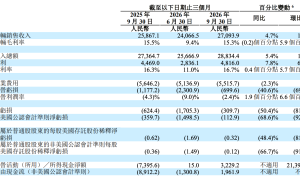
CFO, Alibaba Group Thank you, Eddie. This quarter, our business delivered strong growth in both revenue and earnings because of our strategic focus on AI plus cloud growth and profit sustainability in consumption business. Revenue from AI Cloud and compute services grew 53% year-over-year, with EBITDA margins sequentially rising to 14.5%. The growth of recurring revenue from external customers accelerated to 67% year-over-year. The strong growth reflected broader-based demand for our AI plus cloud services. On consumption, EBITDA of our e-commerce group achieved 243% year-over-year growth this quarter, primarily driven by a significant loss reduction in quick commerce. In addition, our China e-commerce business contributed to stable operating profit, and the global wholesale business delivered strong profits while we reduced the losses in the international e-commerce business. Now, let's look at the financial results for this quarter. Total revenue increased 10% year-over-year to CNY 272 billion, driven by the strong momentum in cloud business and quick commerce. Total adjusted EBITDA increased 260% to CNY 32.6 billion, primarily attributable to the improved operating results in Taobao Instant Commerce in cloud business, as well as enhanced operating efficiencies across various businesses. GAAP net income was CNY 64.4 billion, an increase of 213%, primarily driven by the increase in net investment income and income from operations. Operating cash flow was strong this quarter, increasing 55% year-over-year to CNY 15.7 billion. CapEx was CNY 50.5 billion, or $7.5 billion this quarter. Due to continued investments in AI infrastructure to meet strong and accelerating customer demand, the significant year-over-year increase was due to an acceleration in scaling compute capacity, higher pricing of a broader range of chip components, and increasing CPU compute capacity driven by anticipated growing customer adoption of AI agents. The quarter-over-quarter decline from CNY 67.7 billion, or $10 billion in the previous quarter, reflects fluctuations in procurement cycles. We will maintain our disciplined approach by consistently tracking and evaluating the projected ROIC for future CapEx. Free cash flow was an outflow of CNY 34.5 billion, compared to an outflow of CNY 21.8 billion in the same quarter last year. The decrease was mainly attributed to the investment in cloud infrastructure, partly offset by reduced losses in Taobao Instant Commerce and increased customer prepayments for our cloud services. The quarter-over-quarter improvement from an outflow of CNY 44.7 billion last quarter reflects our prudent cash management. As of September 30, 2026, we continue to maintain a strong net cash position of $32.9 billion, up from $30.7 billion in the previous quarter. Excluding debt with maturities beyond five years, our net cash position was at approximately $49 billion. Our robust operating cash flow and net cash position, together with realized investment gains, give us the confidence in the financial flexibility to invest in long-term growth. We will maintain disciplined investments in AI capabilities with a focus on return on invested capital while targeting to achieve positive free cash flow. Let me now turn to our segment results. Alibaba E-commerce Group. We sustained the revenue stability with CMR decreasing 5% year-over-year and growing 1% on a like-for-like basis if the contra revenue impact from the new business development program were excluded. Revenue from China quick commerce business was CNY 58.8 billion, an increase of 22%, primarily driven by Freshippo's robust growth across online and offline channels. Alibaba E-commerce Group's adjusted EBITDA grew 243% to CNY 38.9 billion, primarily driven by a significant loss reduction in the China quick commerce business. Taobao Instant Commerce continued to improve its UE, reflecting higher average order value. Marketplace e-commerce delivered strong earnings, supported by stable operating profit of the China e-commerce business, a loss reduction in the international e-commerce business, and strong growth in the global wholesale business. Now let's review the business updates and results of Alibaba Cloud and compute services. Total revenue was CNY 61 billion, a 53% increase from the same quarter last year. Revenue from external customers was CNY 47 billion, with growth accelerating to 64%. Recurring revenue from external customers, which excludes compute equipment solutions revenue, grew 67% to CNY 37 billion. Customers continue to expand their use of our Alibaba Cloud services, driven by strong demand for AI computing and core CPU services, including storage, compute, security, and networking. This quarter's AI-related product revenue was CNY 17.9 billion, implying an annual revenue run rate of CNY 71.7 billion. It delivered a 13th consecutive quarter of triple-digit growth and accounted for 49% of external recurring revenue. The adjusted EBITDA margin expanded to 14.9%, benefiting from pricing enhancements amid tight market supply and scale-driven operating leverage. We reiterate our calendar year 2030 guidance of achieving $100 billion in external cloud revenue with a long-term margin exceeding 20%, driven by broader enterprise adoption and deeper integration of our AI products into core business workflows. Next, let's look at AI Labs and applications. Total revenue was CNY 4.4 billion, a 51% increase from the same quarter last year, primarily driven by rising demand for agentic AI products. The segment narrowed loss quarter-over-quarter to CNY 10.5 billion. We observed improved efficiency in both model training and marketing spend on the Qwen APP. We are also continuously upgrading our AI agent offerings for both businesses and consumers through innovations across QwenWork and the Qwen APP. in October, we introduced the QwenWork E-Commerce, which is integrated into QwenWork and is able to automate end-to-end cross-platform operations for e-commerce merchants. Additionally, we have launched QwenGo, a cloud-based personal agent embedded within the Qwen APP. All other segment revenue decreased 5% year-over-year to CNY 27.7 billion, reflecting the decrease in revenue from Cainiao. All other adjusted EBITDA was a loss of CNY 3.3 billion, primarily due to our increased investment in technology businesses. In conclusion, these strong financial results demonstrate that advances across our co-design integrated AI stack, together with the profit sustainability of our consumption business, position us well to capture increasing diverse demand across industries and create greater value for our shareholders. Building on this momentum, we will continue to balance disciplined investments for growth with a focus on return on invested capital and proactive cash management to accelerate our journey to positive free cash flow. Thank you. That's the end of our prepared remarks. We can open up for Q&A.
Lydia Liu
Operator
let's go with the first question. Thank you.
Operator
Thank you. Your first question comes from
Gary Yu
with Morgan Stanley.
Gary Yu
Analyst, Morgan Stanley Hi, good evening. Thank you, management, for taking my questions. My question is about the cloud revenue outlook. First of all, I appreciate the guidance of $100 billion in 2030. But in light of the latest BIS announcement, how should we look at the cloud revenue growth in the next two quarters within the fiscal year? Are we still confident to deliver over 50% revenue growth going into next fiscal year in FY 2028? If so, what makes us confident about it in light of the latest regulatory environment? Thank you. Speaker 7 [Non-English content]
Eddie Wu
Director and CEO, Alibaba Group [Non-English content] Speaker 4 Thank you. Our long-term business plan through to 2030 has always been built on T-Head's chip supply roadmap. As T-Head's capacity ramps up, domestic compute will contribute a higher proportion of our overall compute and will become the primary engine supporting cloud revenue growth, subsequently lowering dependence on overseas compute. The market does remain supply constrained. That is true globally and especially here in China, I think over the next couple of years. As we continue to advance our full-stack AI products centered on T-Head and supply chain, we see strong visibility towards the previously communicated calendar year 2030 targets of $100 billion in external cloud revenue and EBITDA margin of 20+% .
Eddie Wu
Gary Yu
Analyst, Morgan Stanley Thank you.
Lydia Liu
VP and Head of Investor Relations, Alibaba Group Next question, please.
Operator
Our next question comes from
Kenneth Fong
with UBS.
Kenneth Fong
Analyst, UBS Hi. Good evening, management, and thanks for taking my question. I actually have a follow-up also regarding the tighter U.S. restriction affecting the access to advanced GPU and overseas compute. How should we think about the CapEx trajectory to reach our compute target of 20 GW? I understand the situation is still very dynamic. With a potential change in our CapEx cadence, would it be possible that we would turn free cash flow positive earlier than expected? Thank you. Speaker 7 [Non-English content]
Eddie Wu
Kenneth Fong
Analyst, UBS Thank you.
Lydia Liu
VP and Head of Investor Relations, Alibaba Group Next question, please.
Operator
Your next question comes from
Joyce Ju
with Bank of America.
Joyce Ju
Analyst, Bank of America Good evening, management. Thanks for taking my questions and congrats on this very solid quarter. My question is on your core e-commerce business. Given the soft macro environment and the cautious peer guidance for the fourth quarter, what is your December quarter outlook for Taobao Tmall in terms of CMR growth and adjusted EBITDA trajectory? On instant commerce, could you update us on your progress in the December quarter and your visibility on the timeline for further loss reduction next year? Thank you. Speaker 7 [Non-English content] [Non-English content]
Jiang Fan
CEO of Alibaba E-commerce Business Group, Alibaba Group [Non-English content] Speaker 4 Thank you. In the September quarter, our e-commerce business performed in line with expectations. Domestic e-commerce remained stable. Quick commerce grew well on a sequential basis while narrowing losses substantially. Profitability across our other businesses improved meaningfully. As you pointed out in your question, yes, indeed, the domestic consumption environment has remained under pressure in the December quarter. Consumers are becoming more cautious in their spending, and certain categories continue to face intense competition. Quarter to date, our key operating metrics have been in line with the trend of national online physical goods retail sales. In the current consumption environment, consumer staples are showing healthier growth than discretionary products, and we will continue to further strengthen our competitiveness in staples during regular selling periods.
Jiang Fan
CEO of Alibaba E-commerce Business Group, Alibaba Group [Non-English content] Speaker 4 Turning to quick commerce, quick commerce will remain a key driver of platform growth over the next few years. In the September quarter, GTV of online non-food categories of quick commerce grew more than 40% year-over-year, outpacing the industry. In particular, our self-operated front warehouses expanded fast. In categories such as food and fresh produce and daily necessities, quick commerce continues to reshape consumer habits and drive growth in these categories. On the food delivery side, our unit economics improved in line with expectations, market share remained stable, and average order value continued to rise.
Jiang Fan
CEO of Alibaba E-commerce Business Group, Alibaba Group [Non-English content] Speaker 4 In the December quarter, we expect our losses in the quick commerce business to continue narrowing. We remain committed to our goal of halving losses next year and achieving profitability in instant retail by fiscal year 2029.
Jiang Fan
CEO of Alibaba E-commerce Business Group, Alibaba Group [Non-English content] Speaker 4 Beyond B2C e-commerce and quick commerce, other businesses within our e-commerce segment, including B2B and Xianyu, have also made solid progress in recent years. This quarter, we integrated our international and domestic B2B businesses to better serve overseas demand with domestic supply. By leveraging AI, we believe this integration will unlock greater potential across the entire B2B business. In the September quarter, Xianyu delivered 29% order growth and achieved continued profitability. We believe these businesses will continue to contribute incremental revenue and profit to the overall e-commerce segment going forward.
Lydia Liu
VP and Head of Investor Relations, Alibaba Group Thank you. Next question, please.
Operator
Your next question comes from
Robin Zhu
with Bernstein.
Robin Zhu
Analyst, Bernstein Hi, thanks management for taking my question. I guess there are two slight parts to my question. One is, could management discuss the impact of the BIS restrictions on model training and therefore the speed of iteration of the flagship Qwen models? Related is, I guess our understanding is that a proportion of your data center capacity expansion is going to be funded by partners, T-Head customers. Could you share any updates on progress towards deals of this nature potentially as a proof of concept? Thank you. Speaker 7 [Non-English content]
Eddie Wu
Director and CEO, Alibaba Group [Non-English content] Speaker 7 [Non-English content] Speaker 4 Thank you for the question. We are in a stage now when new regulations regarding compute power and the acquisition of compute power are being implemented and with numerous detailed rules that will be coming out. What I can say as regards Alibaba's situation is that we have obtained and used compute in compliance with applicable laws and regulations, and of course, we will continue to do so. But because these are new rules coming out now, it is too early at this stage for us to evaluate the impact. But as I was saying earlier, we expect to ramp up very significantly production capacity of T-Head chips in the slightly longer term, certainly by 2027. Our current T-Head chips are already capable of fully supporting the training of large scale, including ultra-large scale models. In fact, this year we are using this year's chips already to be training the next generation of models. So as T-Head production capacity ramps up, we expect that that will be providing the long-term support for model development for both us, for our partners, for our customers. It will be domestic chips that will be underpinning all of that training, including pre-training and including post-training. So that is when we expect to see that ramp up in 2027, 2028. I think once we get there, we will actually be in a better position to control and pace the speed at which we iterate our foundation models.
Lydia Liu
VP and Head of Investor Relations, Alibaba Group Okay, next question, please.
Operator
Your next question comes from
Ellie Jiang
with Macquarie.
Ellie Jiang
Analyst, Macquarie All right. Thank you so much for taking my question. I have a question mostly regarding T-Head. We are pretty encouraged to hear management commenting on the solid ramp-up pace for T-Head and obviously the promising pipeline. I am just wondering what proportion of the incremental training and inference capacity can T-Head supply over the next few years? Also just a quick follow-up, can management comment on the latest updates regarding T-Head's spin-off and IPO timeline? Once this sort of comes out, how do we really assess the internal versus external resource allocation for T-Head, and what will be the implication on cloud margins? Thank you. Speaker 7 [Non-English content]
Eddie Wu
Director and CEO, Alibaba Group [Non-English content] Speaker 4 Thank you for your question. Looking ahead to 2027, 2028, I think after 2027, most of the incremental AI chip capacity we will add will be primarily proprietary domestic chips. At the same time, we will also purchase other chips from other domestic suppliers, primarily to support inference workloads. Our own flagship proprietary chips will be used as a first priority to support the training and iteration of our foundation models, but also to support training for our close partners. It will be a balanced allocation where the first priority, of course, will be to support our own model training needs. As long as our own model training needs are satisfied, then, of course, to provide resources to our important customers. At the same time, we will also be supporting inference workloads with a wider variety of domestic chips, including domestic chips from other brands.
Eddie Wu
Director and CEO, Alibaba Group [Non-English content] Speaker 4 The other part of your question regarding profitability of the cloud business. I think that period 2027, 2028 will be the period in which compute supply is at its scarcest in China's domestic market. I think that is actually very favorable when it comes to overall compute pricing and gross margin for our compute offerings. At the same time, because we are using our own proprietary domestic chips and ramping up very significantly production capacity, there will be cost advantages there and across the supply chain in general. I think that these factors are favorable when it comes to thinking about gross margin.
Eddie Wu
Director and CEO, Alibaba Group [Non-English content] Speaker 4 Yeah, and on your question about T-Head spin-off and IPO, we recently announced that T-Head has on a confidential basis submitted a listing application to the regulators. Given listing compliance requirements, we are unable to disclose T-Head's financial information or other non-public information at this stage. What we can //confirm/i/i is that domestic compute continues to account for a growing share of Alibaba Cloud's overall compute capacity, and that's a trend that is structurally positive for our cloud business.
Lydia Liu
VP and Head of Investor Relations, Alibaba Group Next question, please.
Operator
Our next question comes from
Ronald Keung
with Goldman Sachs.
Ronald Keung
Analyst, Goldman Sachs Thank you, Eddie, Toby, Fan and Lydia. So pleasant to see our sequentially narrowed loss for the AI labs and application segment. Just want to ask about we're seeing other China internet giants are actually ramping up on the investment scale on the model and application layer. How does management see the AI value eventually? Would it kind of eventually be at the application agent layer and therefore the investment priority for QwenWork? How do we differentiate QwenWork and the Qwen models and the implications for this segment's investment scale loss for the next few quarters and one or two years? Thank you. Speaker 7 [Non-English content]
Eddie Wu
Lydia Liu
VP and Head of Investor Relations, Alibaba Group Next question please.
Operator
Our next question comes from
Thomas Chong
with Jefferies.
Thomas Chong
Eddie Wu
Eddie Wu
Director and CEO, Alibaba Group [Non-English content] Speaker 4 Turning to your question about overseas cloud business. We're still currently assessing how new regulations on compute exports will affect that business, and it will take a bit of time to analyze and assess those impacts. But at present, Alibaba operates 109 availability zones across 32 regions worldwide. This includes data centers in the Netherlands, France, and Brazil that we're progressively bringing online. Looking to the future, I think that developing the overseas business for Alibaba Cloud will be a sustained focus going forward. That could involve a number of different partnership models. We can work with different overseas partners in different ways, and I believe that down the road, exporting our own proprietary chips is also a viable option for us. Of course, we would only pursue that kind of initiative after having fully satisfied domestic demand. But looking ahead, we view Alibaba Cloud as a comprehensive full-stack infrastructure, and it can support Chinese companies' global expansion as well as overseas customers. So, we continue to have strong confidence in the long-term prospects of this business, including overseas, and look forward to its continued growth.
Lydia Liu
VP and Head of Investor Relations, Alibaba Group
Operator
let's take the last question.
Operator
Your next question comes from
Alicia Yap
with Citigroup.
Alicia Yap
Analyst, Citigroup Hi. Good evening, management. Thanks for taking my questions. I wanted to follow up on the cloud margin. Can management elaborate the key growth drivers with the decent improvement of the cloud margin this quarter? How should we be thinking about the cloud margin trends in the coming quarter? Also given the latest constraint on the cloud compute environment, is there a chance that Alibaba might be able to increase the cloud pricings to meet the stronger demand? Would there be any chance on the AI lab losses could also be narrowed at a faster pace amid the latest change of the compute environment? Thank you. Speaker 7 [Non-English content]
Eddie Wu
Lydia Liu
VP and Head of Investor Relations, Alibaba Group All right, thank you for joining us today, and we look forward to speaking with all of you again soon.
Operator
That does conclude our conference for today. Thank you for participating. You may now disconnect.
中文译文
Lydia Liu (阿里巴巴集团投资者关系负责人)
阿里巴巴集团投资者关系负责人。请开始。
Lydia Liu (阿里巴巴集团投资者关系副总裁兼负责人)
各位晚上好,欢迎参加阿里巴巴集团 2026 年九月季度业绩电话会议。今天参会的有:
Joe Tsai (董事会主席)
Eddie Wu (首席执行官)
Toby Xu (首席财务官)
Jiang Fan (阿里巴巴电商业务集团首席执行官)
我先快速说明前瞻性陈述安全港条款。我们今天的发言将包含基于当前预期作出的前瞻性陈述,受风险和不确定性影响。会议将讨论部分 Non-GAAP 财务指标;GAAP 与 Non-GAAP 指标之间的调节见今日业绩新闻稿及投资者演示材料。除特别说明外,评论均为同比口径。电话会回放将于今日稍后在公司网站提供。下面我把会议交给 Eddie。
Eddie Wu (阿里巴巴集团董事兼首席执行官)
各位好,欢迎参加阿里巴巴集团 2027 财年第二季度业绩电话会。本季度阿里巴巴集团收入增长提速,盈利能力持续改善。集团总收入同比增长 10%。AI 云及计算服务外部收入增速提升至 64%;同时,来自外部客户的经常性收入同比增速提升至 67%。经调整 EBITDA 利润率升至 14.5%。AI 相关产品收入连续第 13 个季度实现三位数增长,年化收入跑率超过 100 亿美元。各电商业务盈利能力显著改善;即时零售业务在保持市场份额的同时持续大幅收窄亏损。AI 模型能力的快速进步正在加速各行业对 AI 应用的采用,并拉动训练和推理需求;AI Agent 的规模化部署进一步推高计算需求。这些因素叠加的结果是,未来几年全球计算需求将超过供给。这一旺盛需求为 AI 的大规模商业化奠定了坚实基础。接下来,我将从四个方面展开说明:AI 与云商业化、平头哥 AI 芯片、模型与 AI 应用,以及消费业务。第一,AI 与云的收入和利润增长均在提速。本季度 AI 云及计算服务来自外部客户的收入同比增长 64%,为连续第 10 个季度增速提升。经调整 EBITDA 同比增长 121%,EBITDA 利润率扩大至 14.5%。这一表现由计算、存储、MaaS 及 AI 应用各业务的增长以及协同效应共同驱动。AI 相关产品季度收入达人民币 179 亿元,占阿里云外部经常性收入的 49%。AI 已成为我们云业务的核心收入支柱;AI 相关产品年化收入跑率超过 100 亿美元。强劲的收入增长反映市场对我们「AI+云」服务的广泛需求。除 AI 实验室的训练和推理需求外,我们持续看到中国各行业客户的旺盛需求,包括大型国有企业,以及智能制造、汽车、具身智能和生物技术领域的公司。第二,我们持续扩大平头哥 AI 芯片出货规模并强化供应链能力。先看芯片:平头哥已建立覆盖 GPU、CPU、存储和网络芯片全栈的自研芯片组合。自八月发布以来,由真武 M890 驱动的超节点实例已实现规模爬坡并进入大规模商业化。我们预计下一代真武 V900 芯片将于 2027 日历年第一季度开始量产。真武 V900 的计算性能为 M890 的 3 倍。由真武 V900 驱动的下一代超节点支持大规模网络互联,可承载超大规模模型的训练和推理等工作负载。这些超节点将成为阿里云 AI 基础设施的基石;真武 V900 超节点集群将于 2027 年第二季度进入商业规模上线。平头哥正加快三代 GPU 路线图推进:今年全面推出真武 M890;计划在 2027 年为 V900 提升供应链并进入大规模生产,2028 年推进 J900。由自研国产芯片支撑的基础设施正成为阿里巴巴全栈 AI 能力的基础,将持续为集团及阿里云客户提供模型训练、推理和 Agent 工作负载支持,带动集团 AI 收入增长。通义千问已在平头哥国产芯片上训练下一代模型,Model Studio 千帆平台也已在国产芯片上提供模型推理。我们的全栈 AI 基础设施将在国内计算供应链中占据明显优势。自研芯片与模型的深度集成将持续降低单位计算成本,帮助我们在 AI 应用开发中获得更高效率。综合考虑上述因素,我们对 2030 日历年的目标保持不变:实现外部云收入 1,000 亿美元,利润率超过 20%。第三,我们持续推进模型与 AI Agent 应用。新发布的基础模型 Qwen4-Max 拥有 2.4 万亿主干参数。我们持续提升其关键能力,包括 Agent 任务和编程能力,在这两方面它已位列全球领先模型。头部合作伙伴也认可了通义千问的能力:与通义千问深度集成的 Apple Intelligence 将于十二月面向中国用户推出。企业侧,QwenWork 于八月上线,迅速成为领先的企业级 AI Agent;我们近期推出了 QwenWork E-Commerce,电商付费用户占比持续提升。消费侧,通义 APP 正成为帮用户完成事务的个性化助手,目前已覆盖 20 多个日常生活场景的服务。第四,电商业务盈利能力显著增长,中国电商 EBITDA 及利润率改善。本季度我们的电商业务实现收入稳步增长,利润大幅提升;中国电商经调整 EBITDA 和利润率也显著改善,体现其盈利稳定性。即时零售业务保持市场份额并持续收窄亏损,单位经济模型环比改善。两个季度前,我们的 AI 投资开始越过商业化拐点;上一季度增长提速、利润率扩大;本季度这些投资更快地兑现商业成果,回报更加清晰。我们在计算和云基础设施上的多年投入赋予我们全栈产品优势和规模效应,正成为阿里巴巴在 AI 行业的关键竞争优势,使我们能够灵活应对行业变化,并大规模提供 AI 产品以满足客户不断增长的 AI 需求。展望未来,我们将继续投资 AI 基础设施,巩固领先地位并强化长期竞争力。下面把会议交给 Toby 汇报财务更新。谢谢。
Toby Xu (阿里巴巴集团首席财务官)
谢谢 Eddie。本季度,由于战略上聚焦「AI+云」增长以及消费业务利润的可持续性,我们的业务在收入和盈利两方面均实现强劲增长。AI 云及计算服务收入同比增长 53%,EBITDA 利润率环比升至 14.5%;来自外部客户的经常性收入同比增速提升至 67%。强劲增长反映市场对我们「AI+云」服务更广泛的需求。消费业务方面,本季度电商集团 EBITDA 同比增长 243%,主要由即时零售业务大幅减亏驱动。中国电商业务贡献了稳定的经营利润,全球批发业务实现强劲利润,同时国际电商业务亏损收窄。下面看本季度财务结果。总收入同比增长 10%,达人民币 2,720 亿元,由云业务和即时零售的强劲势头带动。经调整 EBITDA 总额同比增长 260%,达人民币 326 亿元,主要来自淘宝即时零售及云业务经营成果改善,以及各业务经营效率提升。GAAP 净利润为人民币 644 亿元,同比增长 213%,主要由净投资收益增加和经营利润提升驱动。本季度经营现金流强劲,同比增长 55%,达人民币 157 亿元。本季度资本开支为人民币 505 亿元,即 75 亿美元。由于持续投资 AI 基础设施以满足强劲且加速的客户需求,资本开支同比大幅增加,原因包括计算产能规模化爬坡提速、更多种类芯片组件价格走高,以及预期 AI Agent 客户采用度提升所带动的 CPU 计算容量增加。环比上一季度的人民币 677 亿元(即 100 亿美元)有所下降,反映采购周期的波动。我们将保持纪律性方法,持续跟踪并评估未来资本开支的预计 ROIC。自由现金流为流出人民币 345 亿元,去年同期为流出人民币 218 亿元。现金流减少主要归因于云基础设施投资,部分被淘宝即时零售减亏以及客户预付云服务款项增加所抵消;环比上一季度流出人民币 447 亿元有所改善,体现我们审慎的现金管理。截至 2026 年 9 月 30 日,我们继续保持强劲净现金头寸 329 亿美元,高于上一季度的 307 亿美元;剔除五年以上到期债务后,净现金头寸约为 490 亿美元。稳健的经营现金流和净现金头寸,加上已实现的投资收益,使我们有信心在财务上具备投资长期增长的灵活性。我们将在聚焦投资资本回报率的同时保持对 AI 能力的纪律性投入,并以实现自由现金流转正为目标。下面看分部业绩。阿里巴巴电商集团:收入保持稳定,客户管理收入(CMR)同比下降 5%;若剔除新业务发展计划带来的抵减收入影响,按同口径同比增长 1%。中国即时零售业务收入为人民币 588 亿元,增长 22%,主要由盒马在线上线下渠道的强劲增长带动。阿里巴巴电商集团经调整 EBITDA 增长 243%,达人民币 389 亿元,主要由中国即时零售业务大幅减亏驱动。淘宝即时零售持续改善单位经济模型(UE),体现客单价提升。平台电商盈利强劲,依托中国电商业务稳定的经营利润、国际电商业务减亏以及全球批发业务的强劲增长。下面回顾阿里云及计算服务的业务更新和业绩。总收入为人民币 610 亿元,同比增长 53%。外部客户收入为人民币 470 亿元,增速提升至 64%。剔除计算设备解决方案收入后的外部客户经常性收入增长 67%,达人民币 370 亿元。客户持续扩大对阿里云服务的使用,驱动力来自 AI 计算以及存储、计算、安全和网络等核心 CPU 服务的强劲需求。本季度 AI 相关产品收入为人民币 179 亿元,对应年化收入跑率人民币 717 亿元;连续第 13 个季度实现三位数增长,占外部经常性收入的 49%。经调整 EBITDA 利润率扩大至 14.9%,受益于市场供给偏紧下的定价提升以及规模驱动的经营杠杆。我们重申 2030 日历年指引:实现外部云收入 1,000 亿美元,长期利润率超过 20%,由企业更广泛的采用以及我们 AI 产品更深地嵌入核心业务流程所推动。接下来看 AI Labs 及应用。总收入为人民币 44 亿元,同比增长 51%,主要由 Agent 类 AI 产品需求上升带动。该分部亏损环比收窄至人民币 1,050 亿元。我们观察到通义 APP 在模型训练和营销支出两方面的效率均有改善。我们也在通过 QwenWork 和通义 APP 的持续创新,不断升级面向企业和消费者的 AI Agent 产品。十月,我们推出了集成于 QwenWork 的 QwenWork E-Commerce,能够为电商商家自动化完成端到端跨平台运营。我们还推出了嵌入通义 APP 的云端个人 Agent「QwenGo」。其他分部收入同比下降 5%,至人民币 277 亿元,反映菜鸟收入减少。其他分部经调整 EBITDA 为亏损人民币 33 亿元,主要由于我们加大对技术业务的投资。总结而言,强劲的财务结果表明,我们协同设计的一体化 AI 技术栈各环节的进步,叠加消费业务利润的可持续性,使我们有良好条件承接各行业日益多元的需求,并为股东创造更大价值。在此势头基础上,我们将继续平衡增长型纪律投资与对投资资本回报率的关注,并主动管理现金,加快走向自由现金流转正。谢谢。准备发言到此结束,下面进入问答环节。
Lydia Liu (阿里巴巴集团投资者关系副总裁兼负责人)
谢谢 Toby。下面开始问答环节。欢迎用中文或英文提问,第三方传译员将进行交替传译;如有不一致,以管理层原语言发言为准。
Operator (电话会主持)
我们先进行第一个问题。谢谢。
Operator (电话会主持)
谢谢。第一个问题来自
Gary Yu (摩根士丹利)
Gary Yu (摩根士丹利分析师)
您好,晚上好。感谢管理层回答我的问题。我的问题关于云收入展望。首先,我理解并感谢给出的 2030 年 1,000 亿美元指引。但鉴于最新的 BIS(美国工业与安全局)公告,我们应如何看待本财年接下来两个季度的云收入增长?进入下一财年 FY2028,我们是否仍有信心实现超过 50% 的收入增长?如果有,在最新监管环境下,支撑这一信心的依据是什么?谢谢。
Eddie Wu (阿里巴巴集团董事兼首席执行官)
谢谢。我们截至 2030 年的长期业务规划一直建立在平头哥芯片供应路线图之上。随着平头哥产能爬坡,国产计算将在我们整体计算中占比更高,并成为支撑云收入增长的主要引擎,进而降低对海外计算的依赖。市场供给仍然偏紧,全球如此,尤其在中国,我认为未来几年都是如此。随着我们持续推进以平头哥及供应链为核心的全栈 AI 产品,对于此前沟通的 2030 日历年目标——外部云收入 1,000 亿美元、EBITDA 利润率 20% 以上——我们看到了很强的可见度。
Eddie Wu (阿里巴巴集团董事兼首席执行官)
关于明年展望,新的计算出口管制规则将影响明年的产品和服务,供应链方面仍存在不确定性。不过,我们自研国产算力的进展实际上已经快于最初预期。综合考虑各项因素,明年的经营计划和目标可能受到一定程度影响,但我们目前仍在评估过程中。综合各因素判断,我们预计云收入增长目标可能处于 30%–45% 区间;随着国产计算产品规模在 2028 日历年扩大,我们预计云收入增速将在 2028 日历年回升至 50% 或更高。
Gary Yu (摩根士丹利分析师)
谢谢。
Lydia Liu (阿里巴巴集团投资者关系副总裁兼负责人)
下一个问题,请。
Operator (电话会主持)
下一个问题来自
Kenneth Fong (瑞银 UBS)
Kenneth Fong (瑞银 UBS 分析师)
您好,晚上好,管理层,感谢回答我的问题。实际上我有一个追问,同样围绕美国收紧对先进 GPU 和海外计算获取的限制。我们应如何看待达到 20 GW 计算目标所需的资本开支轨迹?我理解局势仍在快速变化。随着资本开支节奏可能调整,我们是否有可能早于预期实现自由现金流转正?谢谢。
Eddie Wu (阿里巴巴集团董事兼首席执行官)
谢谢提问。确实,我认为当前各地区围绕计算的全球政策正在发生重大变化。从长期视角看,数据中心建设必然会受到一定影响。根据我们目前的初步评估,长期 20 GW 目标可能需要下调;相应地,整体资本开支计划也会受到一定影响。尽管存在这一下调可能,我们将更积极地推进整体规划,特别是国产算力及相关供应链的发展。目前初步评估是,我们预计在 2027、2028 日历年对国产芯片爬坡投入最大力度,并应能在 2028 年下半年实现整体现金流转正。最持续的投资周期将横跨 2027 年上半年和 2028 年。而一旦国产芯片实现大规模持续产出,支出水平将随之缓解。但可以肯定,我们的资本开支计划会受到一定长期影响。
Kenneth Fong (瑞银 UBS 分析师)
谢谢。
Lydia Liu (阿里巴巴集团投资者关系副总裁兼负责人)
下一个问题,请。
Operator (电话会主持)
下一个问题来自
Joyce Ju (美国银行)
Joyce Ju (美国银行分析师)
晚上好,管理层。感谢回答我的问题,也祝贺本季度业绩相当扎实。我的问题关于核心电商业务。鉴于宏观环境偏软、同业对第四季度指引偏谨慎,淘宝天猫在十二月季度的 CMR 增长和经调整 EBITDA 轨迹展望如何?即时零售方面,能否更新十二月季度的进展,以及对明年进一步减亏时间表的可见度?谢谢。
Jiang Fan (阿里巴巴集团电商业务集团首席执行官)
谢谢。九月季度我们的电商业务表现符合预期。国内电商保持稳定;即时零售环比增长良好,同时大幅收窄亏损;其他各业务盈利能力均有明显改善。正如您提问中指出的,国内消费环境在十二月季度确实仍承压,消费者支出趋于谨慎,部分品类竞争持续激烈。截至目前,我们的关键运营指标与全国线上实物商品零售走势一致。在当前消费环境下,必需消费品增长表现优于可选消费品;在常规销售周期中,我们将继续强化在必需品类上的竞争力。
Jiang Fan (阿里巴巴集团电商业务集团首席执行官)
关于即时零售,未来几年它仍将是平台增长的关键驱动力。九月季度,即时零售线上非食品品类 GTV 同比增长超过 40%,跑赢行业;其中自营前置仓扩张迅速。在食品生鲜、日用品等品类,即时零售持续重塑消费习惯并带动品类增长。外卖方面,我们的单位经济模型如期改善,市场份额保持稳定,客单价持续提升。
Jiang Fan (阿里巴巴集团电商业务集团首席执行官)
十二月季度,我们预计即时零售业务亏损将继续收窄。我们坚持目标:明年亏损减半,并在 2029 财年实现即时零售盈利。
Jiang Fan (阿里巴巴集团电商业务集团首席执行官)
除 B2C 电商和即时零售外,电商分部内的其他业务(包括 B2B 和闲鱼)近年也取得扎实进展。本季度我们整合了国内和国际 B2B 业务,以便用国内供给更好服务海外需求。借助 AI,我们相信这一整合将释放整个 B2B 业务的更大潜力。九月季度,闲鱼订单增长 29%,并持续实现盈利。我们相信这些业务未来将继续为整体电商分部贡献增量收入和利润。
Lydia Liu (阿里巴巴集团投资者关系副总裁兼负责人)
谢谢。下一个问题,请。
Operator (电话会主持)
下一个问题来自
Robin Zhu (伯恩斯坦 Bernstein)
Robin Zhu (伯恩斯坦 Bernstein 分析师)
您好,感谢管理层回答我的问题。我的问题大致分两部分。第一,管理层能否讨论 BIS 限制对模型训练、进而对旗舰通义千问模型迭代速度的影响?与之相关,我们理解数据中心产能扩张中有一部分将由合作伙伴(平头哥客户)出资。能否分享此类交易进展的最新情况,例如作为概念验证?谢谢。
Eddie Wu (阿里巴巴集团董事兼首席执行官)
谢谢提问。目前我们正处于新的算力及算力获取规则落地阶段,大量细则还将陆续出台。就阿里巴巴的情况可以说明的是:我们一直依照适用法律法规获取和使用算力,并将继续如此。由于这些是刚出台的新规,现阶段评估影响还为时过早。但如我此前所说,我们预计平头哥芯片产能将在稍长周期内、明确到 2027 年大幅爬坡。现有平头哥芯片已能够完整支撑大规模乃至超大规模模型训练;事实上,今年我们已经在用今年的芯片训练下一代模型。随着平头哥产能爬坡,我们预计它将为我们自身、合作伙伴和客户的模型发展提供长期支撑;支撑所有训练(包括预训练和后训练)的都将是国产芯片。我们预计这一爬坡发生在 2027、2028 年;到那时,我们实际上将处于更有利位置,能够控制和把握基础模型迭代的节奏。
Lydia Liu (阿里巴巴集团投资者关系副总裁兼负责人)
好的,下一个问题,请。
Operator (电话会主持)
下一个问题来自
Ellie Jiang (麦格理 Macquarie)
Ellie Jiang (麦格理 Macquarie 分析师)
好的。非常感谢回答我的问题。我的问题主要关于平头哥。听到管理层谈到平头哥扎实的爬坡节奏以及前景可观的产品管线,我们颇受鼓舞。想了解未来几年平头哥能够供应多大比例的增量训练和推理算力?另外简短追问:管理层能否评论平头哥分拆及 IPO 时间表的最新进展?这一安排落地后,我们应如何评估平头哥内外部资源分配,对云利润率又有何影响?谢谢。
Eddie Wu (阿里巴巴集团董事兼首席执行官)
谢谢提问。展望 2027、2028 年,我认为 2027 年之后,我们新增的 AI 芯片产能大部分将以自研国产芯片为主;同时我们也会从其他国产供应商采购芯片,主要用于支撑推理工作负载。自研旗舰芯片将优先保障自身基础模型的训练和迭代,同时也支持紧密合作伙伴的训练。分配将保持平衡:第一优先当然是满足自身模型训练需求;在自身训练需求得到满足后,再向重要客户提供资源。同时,我们也会用更多种类的国产芯片(包括其他品牌国产芯片)支撑推理工作负载。
Eddie Wu (阿里巴巴集团董事兼首席执行官)
问题的另一部分关于云业务盈利能力。我认为 2027、2028 年将是国内市场计算供给最稀缺的时期;这实际上有利于我们计算产品的整体定价和毛利率。同时,由于我们使用自研国产芯片并大幅提升产能,在芯片本身及整个供应链上都将具备成本优势。我认为这些因素对毛利率是有利的。
Eddie Wu (阿里巴巴集团董事兼首席执行官)
关于平头哥分拆和 IPO 的问题:我们近期已公告,平头哥以保密方式向监管机构提交了上市申请。出于上市合规要求,现阶段我们无法披露平头哥的财务信息或其他非公开信息。可以确认的是,国产计算在阿里云整体计算产能中的占比持续提升,这一趋势对我们的云业务具有结构性正面意义。
Lydia Liu (阿里巴巴集团投资者关系副总裁兼负责人)
下一个问题,请。
Operator (电话会主持)
下一个问题来自
Ronald Keung (高盛)
Ronald Keung (高盛分析师)
谢谢 Eddie、Toby、Fan 和 Lydia。很高兴看到 AI Labs 及应用分部亏损环比收窄。想提问:我们看到其他中国互联网巨头正在模型层和应用层加大投资规模。管理层如何看待 AI 最终价值的落点?价值是否最终归于应用 Agent 层,因此 QwenWork 的投资优先级最高?我们应如何区分 QwenWork 与通义千问模型?这对该分部未来几个季度乃至一两年的投资规模和亏损意味着什么?谢谢。
Eddie Wu (阿里巴巴集团董事兼首席执行官)
谢谢提问。行业内对这一问题确实存在不同观点,不同公司看法各异。目前我认为我们仍处在 AI 发展的早期阶段。就应用与模型何者更重要这一相对关系而言,需要将两者结合来看。应用和模型需要协同发展、相互支撑,这是我们的做法。因为如果应用不是建立在更强、更好、更独特的模型之上,如果所有应用基本运行在同一模型上,这些应用就很容易被复制,也难以建立长期独特价值主张来留住用户、使其继续在企业中或个人桌面上使用该应用。因此我们强调应用与模型联合发展,依托协同效应实现差异化产品能力。在推广和补贴方面我们一直相当克制,真正把重点放在交付难以被竞争对手取代、替代或追平的独特价值上。我们认为实现这一点的最佳方式,就是让模型与应用并行、协同发展。谢谢。
Lydia Liu (阿里巴巴集团投资者关系副总裁兼负责人)
下一个问题,请。
Operator (电话会主持)
下一个问题来自
Thomas Chong (杰富瑞 Jefferies)
Thomas Chong (杰富瑞 Jefferies 分析师)
您好,晚上好。感谢管理层回答我的问题。我的问题首先关于 ARR 趋势。既然我们已强调 ARR 在八月达到新里程碑、超过人民币 200 亿元,我想进一步了解全年目标:财年末是会超过人民币 45 亿元,还是人民币 300 亿元?在这方面,管理层能否评论 ARR 近期趋势,以及如何看待新模型日益流行的竞争格局?第二个问题关于海外战略:管理层能否谈谈对未来几年云收入国内外结构占比的看法?谢谢。
Eddie Wu (阿里巴巴集团董事兼首席执行官)
谢谢。就 MaaS 收入而言,它在很大程度上确实依赖新模型发布。过去两个月左右,我们及合作伙伴的新模型发布略低于我们最初预期。不过我们近期刚推出新旗舰 Qwen4,下一代视频模型也即将问世,我们对其抱有极高期望。因此,我对实现全财年 ARR 人民币 300 亿元目标很有信心,该目标保持不变:人民币 300 亿元。谢谢。
Eddie Wu (阿里巴巴集团董事兼首席执行官)
关于海外云业务的问题:我们目前仍在评估算力出口新规将如何影响该业务,分析和评估这些影响需要一定时间。但目前,阿里巴巴在全球 32 个地区运营 109 个可用区,包括正在逐步上线的荷兰、法国和巴西的数据中心。展望未来,发展阿里云海外业务将是我们持续的重点。这可以采用多种合作模式:我们可以与不同海外伙伴以不同方式合作;我认为长远看,出口自研芯片对我们也是可行选项;当然,我们只会在充分满足国内需求之后推进此类举措。展望未来,我们将阿里云定位为综合性全栈基础设施,既可以支持中国企业全球扩张,也可以服务海外客户。因此我们对该业务(包括海外业务)的长期前景保持很强信心,并期待其持续增长。
Lydia Liu (阿里巴巴集团投资者关系副总裁兼负责人)
Operator (电话会主持)
我们进行最后一个问题。
Operator (电话会主持)
下一个问题来自
Alicia Yap (花旗 Citigroup)
Alicia Yap (花旗 Citigroup 分析师)
您好,晚上好,管理层。感谢回答我的问题。我想追问云利润率。管理层能否详细说明本季度云利润率明显改善的关键增长驱动?下一季度云利润率趋势应如何判断?鉴于当前云计算环境的最新约束,阿里巴巴是否有可能提高云定价以应对更强需求?在计算环境最新变化下,AI Labs 亏损是否也有可能以更快速度收窄?谢谢。
Eddie Wu (阿里巴巴集团董事兼首席执行官)
谢谢提问。我认为云与 AI 业务利润率扩大由若干不同因素共同促成。首先,经常性收入中高毛利产品占比提升;总体而言,这明显推动云利润率改善。我们此前也谈到全球算力短缺正影响整个行业各地;这同样赋予我们一定定价优势,使我们在与客户定价谈判中处于更强地位,从而带来了优于去年的毛利率。另一个因素是,随着数据中心布局持续扩张,我们获得了更大规模效应——不仅体现在自身资源上,也体现在客户依赖我们的产品种类数量上。客户使用我们的产品越多,转换成本就越高。这些因素合起来,对我们云与 AI 利润率具有结构性正面意义。展望更长期未来,随着我们持续发展 AI 相关技术、升级「AI+云」业务,并依托自研芯片,这在毛利率上同样具有结构性优势。特别是,我们的 AI 产品运行在自有云、自研芯片之上,属于非标准化、非大宗商品化产品;阿里巴巴正越来越像许多客户的合作伙伴,为其共同开发产品。这不是客户可以仅凭价格与竞品简单比较的大宗商品化服务。这些结构性变化将进一步区分我们的产品供给,我认为也会让竞争对手更难追赶上。
Lydia Liu (阿里巴巴集团投资者关系副总裁兼负责人)
好的,感谢各位今天参会,期待很快再次与大家交流。
Operator (电话会主持)
今天会议到此结束。感谢参与,现在可以挂断电话。